How nature treats its waste
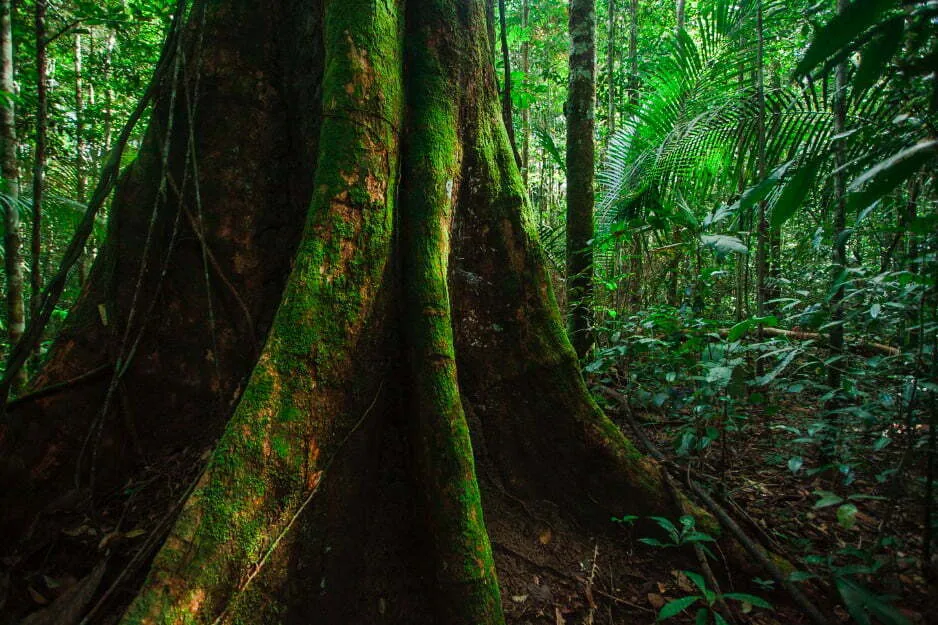
Have you ever wondered how waste breaks down in the forest? And why it doesn't pile up the way it does in cities?
Nature's rhythm creates a balance between fruit production, ripening, and the fall of ripe fruit. Animals follow the same rhythm and hunt only to feed themselves. There is no food stockpiling, no overproduction of food, and no animal population that reproduces without a predator.
To simplify the whole process: ripe fruits fall and are eaten by animals or rot. Hunted animals are devoured by the predator, which, once satisfied, leaves the remains to another group of predators until only carcasses are left. Over all this waste, dry leaves keep falling from the many trees of the forest. Larvae and microscopic organisms start to act, which favors the natural transformation of the waste into organic fertilizer (humus) that enriches the soil.
So why doesn't this natural cycle of organic waste breakdown also happen in cities?
First, because the volume of waste each of us produces every day (about 1 kg per person) is much larger. Second, because the waste collected is not only organic. It is dumped in open dumps or landfills together with many other non-organic materials made by humans. As a result, the organic waste loses its potential to enrich the soil. Worse, organic waste that decomposes in this kind of environment contaminates the soil, because as it breaks down it carries along pollutants found in the non-organic waste of the landfill pile.
This pile of waste, mixed without criteria and with no use of its potential, is what we can call GARBAGE.
In nature, there is no garbage, only waste.
What is the difference between GARBAGE and WASTE?
In nature (and here, “nature” means forest areas untouched by modern humans) there is no garbage, because it is a concept invented by modern humans.
In this environment, everything is transformed. Nothing is wasted. One life becomes food for another, then decomposes and goes back to nourish and enrich the soil. In turn, the fertile soil becomes food for the roots of trees that grow and bear fruit, feeding the animals. The food chain in an untouched natural environment is circular. Nothing is lost.
When humans learned to grow their own food through agriculture, this life-death-life cycle began to change.
People began to group together and form communities.
The production of consumer goods needed for this new way of living began. The need of settled life brought a new configuration to consumer goods: durable goods. They were usually made by skilled people, such as artisans and blacksmiths.
But nothing was as decisive for changing nature's life-death-life cycle as the Industrial Age.
From that point on, our whole notion of consumption changed radically. People started to consume more than they needed. Industrial goods had to be sold, and for that to happen continuously, advertising came into play, urging people to consume more and more, often products they did not need. Products stopped being long-lasting and gradually became “disposable.” Many products really did become disposable (single-use), and some that should have been durable became much more fragile, since they no longer needed to last so long. This forced people to replace their equipment with a newer, better-looking, more modern one. The culture of consuming for the sake of consuming was built little by little, and today it is so rooted in us that it seems it has always been this way.
That is how we created recyclable waste (or at least, waste with the potential to be recycled) and non-recyclable waste: waste that cannot be recycled and is not organic.
When we mix recyclable, non-recyclable, and organic solid waste in the same “pile,” we get GARBAGE. A mountain of garbage that, in the best case, ends up in a landfill in an area far from the city and from busy roads. After all, as the saying goes, “out of sight, out of mind”!
How can we change this?
There are several ways to change this picture and give our waste a proper destination.
Each alternative deserves its own post. What matters is knowing that we have options.
We took the wrong path back then, but life is a spiral and we can always fix our mistakes.